Posted in The End of the Monsoon on January 6th, 2013 by admin – Be the first to comment
 On April 6th, Good Friday 2012, I suffered an aortic disection. I’m told that I called up several friends overnight and left messages that I felt either a heart attack coming on or a panic attack. The last was not impossible since I was considering a return to Saudi Arabia. I was fortunate to have as a house guest Dr. Liliane Bartha who when I rose to greet her took one look and dialed 911. read more »
Posted in Buddhism, The End of the Monsoon, Writing on April 1st, 2010 by admin – 2 Comments
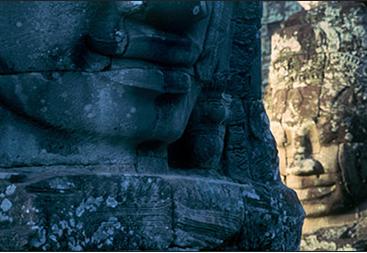
In search of theme and setting
In March of 2007 I sold my first novel, The Desert Contract, in a two book deal, which meant I had to write another political thriller. But about what, and set where?
That summer, while finishing the publisher’s suggested revisions, I read Karen Armstrong’s A Short History of Myth. The final pages held my attention. She suggests that read more »
Posted in Morphine on March 2nd, 2010 by admin – 2 Comments
Background
In October 2005 my late wife, Mariann, was hospitalized in Calgary, Alberta, Canada. This being Canada, that meant that she entered, as a patient, a nationalized health service. Canadians are proud of their health service, their ‘public option’. In fact its quality is variable. Canadians can be even more cut-off from the rest of the world than Americans.
After six weeks, two CAT scans, two misdiagnoses and three weeks in hospitals (two hospitals–she spent two weeks in the wrong one by administrative accident), she was finally diagnosed with pancreatic cancer. Unless you’re the CEO of Apple, this is a death sentence with a six month time frame. read more »
Posted in Clavichord, Music on March 1st, 2010 by admin – Be the first to comment
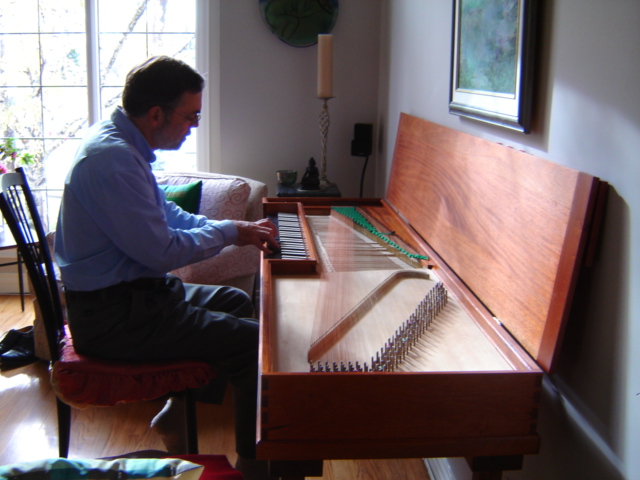
Five octave, unfretted clavichord after Friederici, 1765
I had owned and played a small fretted clavichord since 1982, and in 2004 I started researching five octave, unfretted clavichords, with the idea of building an instrument suitable for playing all of J.S. Bach, and Haydn’s F Minor Variations from 1793. read more »
Posted in cranial cruciate ligament (CCL), The End of the Monsoon on October 31st, 2011 by admin – 1 Comment

The EDB wearing the Cone of Shame
A border collie blows her other, and last, CCL.
On Saturday, October 15th, 2011, while running on the flat near the bank of the Bow River in the company of her owner and her friends, Brian Unger and Sheila Robinson, Eva (the EDB) blew out her left hind knee. This was exactly 7 1/2 months after blowing her right hind knee–she had managed to make a complete recovery.
There followed, a week and two days later, the usual surgery performed by the usual veterinary surgeon, Dr. Bruce Rodger, and the usual clinic: Marda Loop. According to Dr. Rodger the surgery went well, and certainly Eva seems to be recovering well, better in fact–so far–than the first time. I hope to have the staples out by late next week, and to start doggy physical therapy shortly after. She turns 12 in January, but I’m hoping that by the spring she’ll be either back to normal or very close to it. This will be the last surgery she ever goes through. If it gives her, and me, another 2 or 3 years of outdoor activity, and love, it will be worth it.
Posted in cranial cruciate ligament (CCL) on August 7th, 2011 by admin – Be the first to comment
]
The EDB 90% recovered.
From March 2nd to July 31st–five months for a near-total recovery: the EDB is back again.
Five months of doggy physical therapy. It was worth it. It’s good to have her back. Her improvement was so slow, so incremental, that at first I had doubts. It took weeks to see noticeable improvement. But now she’s largely back. What’s still lacking? read more »
Posted in Sex and the Political Thriller, The End of the Monsoon, Writing on March 1st, 2011 by admin – 1 Comment
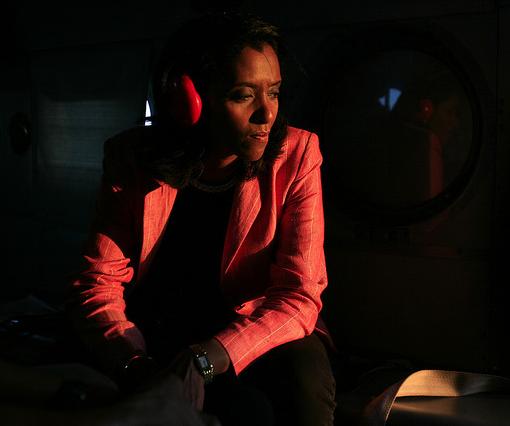
The character of Zainab in an (imaginary) scene from The End of the Monsoon
How much is too much?
A few nights ago I watched ‘Chloe’, the latest Atom Egoyan film. It’s a thriller about a wife who suspects her husband of infidelity, and who hires a prostitute to test his fidelity. There’s a significant amount of sex in the film, most of it verbally described by the actress Amanda Seyfried. Her acting is so good, the verbal description is more disturbing than a straightforward image. Wanting to learn more about the film, I looked it up on Wikipedia. There I discovered that it belongs to a previously unknown (to me) sub-genre, the erotic thriller.
Why, in the 21st century, do we have a sub-genre for a thriller with sex as a strong plot and character device? My British publisher’s assistant editor, a young literary man recently down from Oxford or Cambridge, complained when reading the manuscript of my political thriller The End of the Monsoon that it contained too much sex. My first reaction was: read more »
Posted in Music on December 14th, 2010 by admin – Be the first to comment
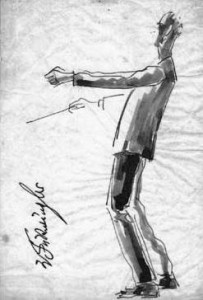
Drawing of Furtwangler by Lisl Steiner
Notes from an eyewitness
Theses, monographs and books have been written about orchestral and instrumental performance practice in the Baroque, Classical, and even the Romantic eras. Indeed, the entire authentic performance and authentic instrument movement, the ‘period performance’ movement, is an attempt to recreate performances of the past. This movement exploded into academic and musical popularity in the ’60s and early ’70s, and resulted in a great deal of textual research and, on the whole, progress in the authentic recreation of historical instruments.
The recreation of performance practice, however, was disappointing. Thousands of recordings were made by ‘academically informed’ conductors and soloists. Too many were thin, metronomic, and dry as dust. read more »
Posted in Buddhism, The End of the Monsoon, Writing on December 14th, 2010 by admin – Be the first to comment
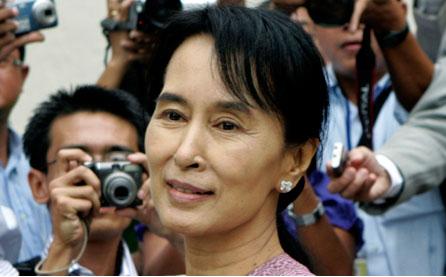
Photograph: Khin Maung
and karma as inspiration for The End of the Monsoon
It was in a bookstore in the old Hong Kong airport in the mid ’90s that I picked up the first book I read by Aung San Suu Kyi. I have it still. It is called The Voice of Hope, and is a collection of conversations she had with Alan Clements.
Suu Kyi has put Burma on the map, and when I needed a prisoner of conscience for the plot of The End of the Monsoon (I was living in Cambodia), I naturally thought of her. read more »
Posted in Music, The End of the Monsoon on December 5th, 2010 by admin – Be the first to comment
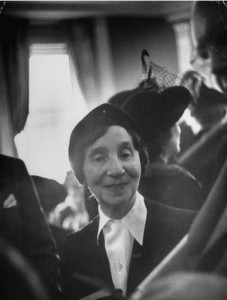
of her recording of the Goldberg Variations
Landowska’s first recording of Bach’s Goldberg Variations, which was not only the first recorded on a harpsichord but the very first recording of the piece ever made, is variously listed as made in 1931, 1933 and 1935; I’m going with the earlier date. I first listened to it on an LP about 1980. It made an indelible impression. She was trained in the classical and romantic repertory, and I’ve read that she played Chopin on the piano all her life, but clearly her heart–or at least a significant part of her heart–was with Bach. She was also a serious musicologist and researcher with the interest and the languages and the cultural background to do original research, and the luck to be active at a time when you could still collect original manuscripts and instruments–before the the looting of Leipzig, the fire bombing of Bremen and the destruction of Berlin and much of western Europe.
Many reviewers describe her Bach as romantic, at least one as Gothic. read more »
Posted in Lieder, Music on October 17th, 2010 by admin – 1 Comment
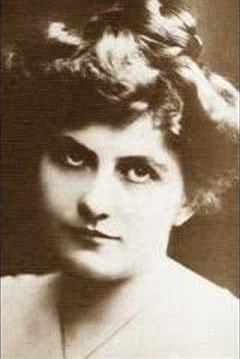
Elena Gerhardt in Leipzig, about 1900
Der Tod, das ist die kühle Nacht
Why does this song of Brahms’, from a poem by Heine, mean so much to me? Why has it meant so much for so many years? Even as I write, the song playing in the background grips my heart.
Most nineteenth century German Lied is about love–or unrequited love, or death. This song may be about all three. It’s hard at first to tell. It’s a triumph of suggestion, of atmosphere. Here’s the German text, followed by an English translation: read more »
Posted in Buddhism, Music, The End of the Monsoon, Writing on August 9th, 2010 by admin – Be the first to comment
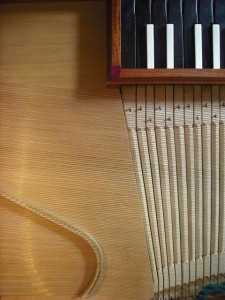
Bach's instrument: the clavichord
Music in The End of the Monsoon
Can music and spirituality have a place in a political thriller? I think they can, if they’re sub-themes illuminating character. In The End of the Monsoon, Mrs Ambler, an idealistic lawyer, is also an amateur musician and practicing Buddhist. Her guilt over her illicit affair strengthens her desire for at least a breath of transcendence.
In 1983 I thought I had such a breath in the wee small hours of the morning, while playing the clavichord in my third world luxury apartment in Riyadh, Saudi Arabia.
In my novel I transferred this experience to the character of Dr White, a no-nonsense, middle-aged expatriate English doctor in Phnom Penh. read more »
Posted in Buddhism, The End of the Monsoon, Writing on July 20th, 2010 by admin – Be the first to comment
Somerset Maugham: wanting, but not quite able, to believe
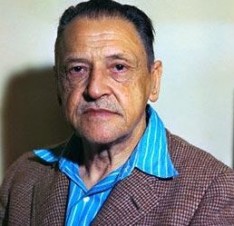
In September of 2007 I flew to Phnom Penh to gather material for a new novel. Two of the books I brought with me were by Maugham: a first edition (a gift from Susana Serna) of The Gentleman in the Parlour, a Record of a Journey from Rangoon to Haiphong (1930), which is as its title suggests a travel book, and a Penguin paperback edition of The Summing Up (1938), a collection of valedictory essays.
In both books Maugham devotes a section to the question of evil; that is, how to satisfactorily explain the existence of evil read more »
Posted in Islam and the War on Terror on May 15th, 2010 by admin – Be the first to comment
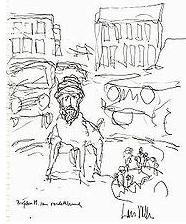
Mohammed as a Swedish roundabout dog (rondellhund): cartoon by Lars Vilks
Ayaan Hirsi Ali’s response to western apologists
While blogging with a very articulate lady from the UK, an evangelical atheist and retired high-level worker for the Labour Party–in other words, to the left of most American liberals–I was struck by her efforts to let Saudi Arabs off the hook read more »
Posted in Music on March 16th, 2010 by admin – 2 Comments
Music and civilization
I’ve just reread, from cover-to-cover, for the first time in years, Lang’s Music in Western Civilization–first published in 1941. My edition dates from 1969. I’m more impressed than ever.
His authority runs through all 1,030 pages. Here are the first lines of the Introduction: read more »
Posted in Arab Revolution, Islam and the War on Terror, The End of the Monsoon on March 13th, 2010 by admin – Be the first to comment

How The New York Times contributes to government abuse
In articles written for the public by respectable journalists, in respectable papers, we find the terms, ‘extraordinary rendition’, ‘detained’, ‘enhanced interrogation techniques’. When in fact, we should be reading, ‘kidnapped’, ‘imprisoned without charge’, and ‘torture’. read more »
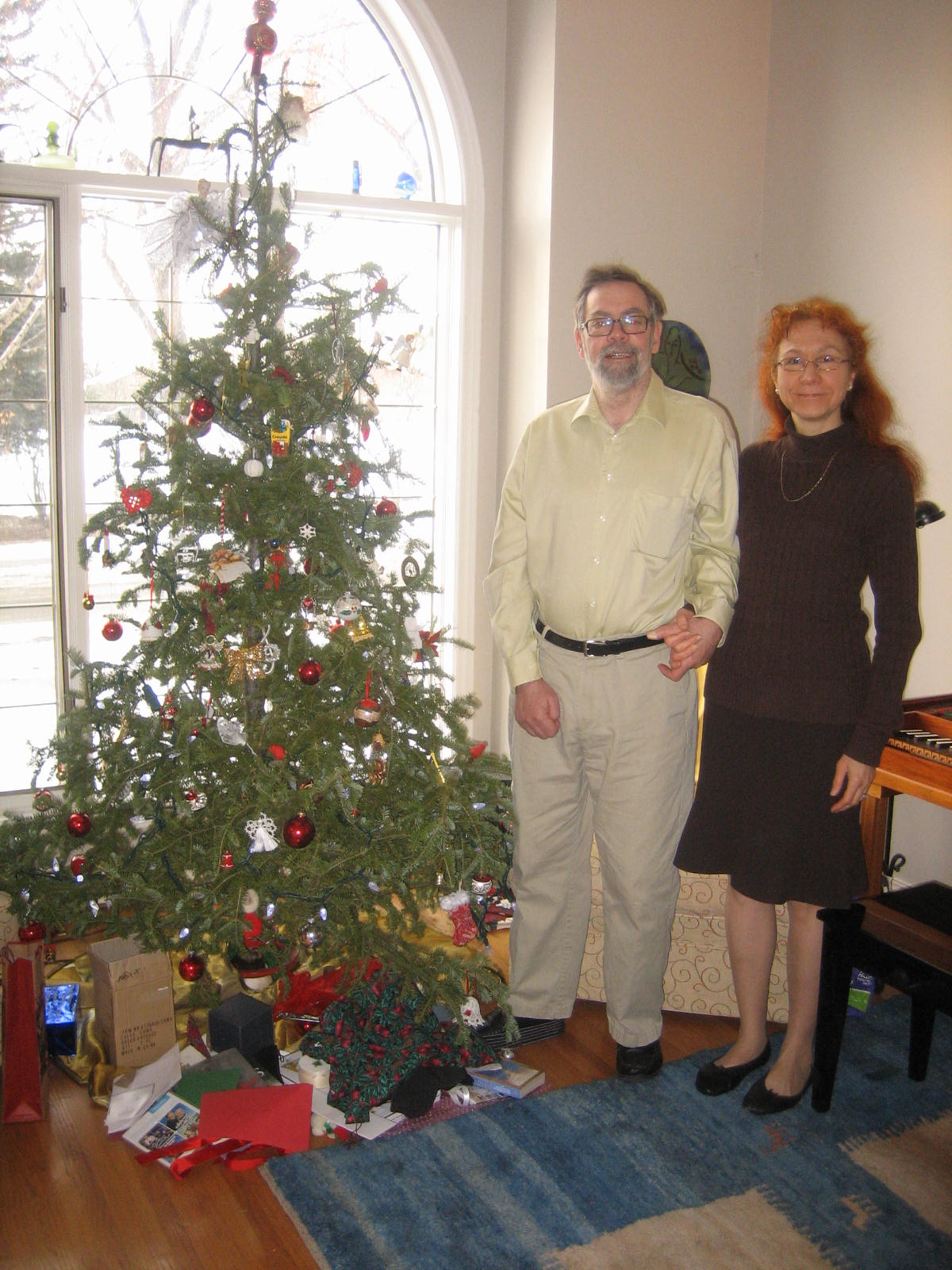 On April 6th, Good Friday 2012, I suffered an aortic disection. I’m told that I called up several friends overnight and left messages that I felt either a heart attack coming on or a panic attack. The last was not impossible since I was considering a return to Saudi Arabia. I was fortunate to have as a house guest Dr. Liliane Bartha who when I rose to greet her took one look and dialed 911. read more »